1888–1927
Anacleto González Flores
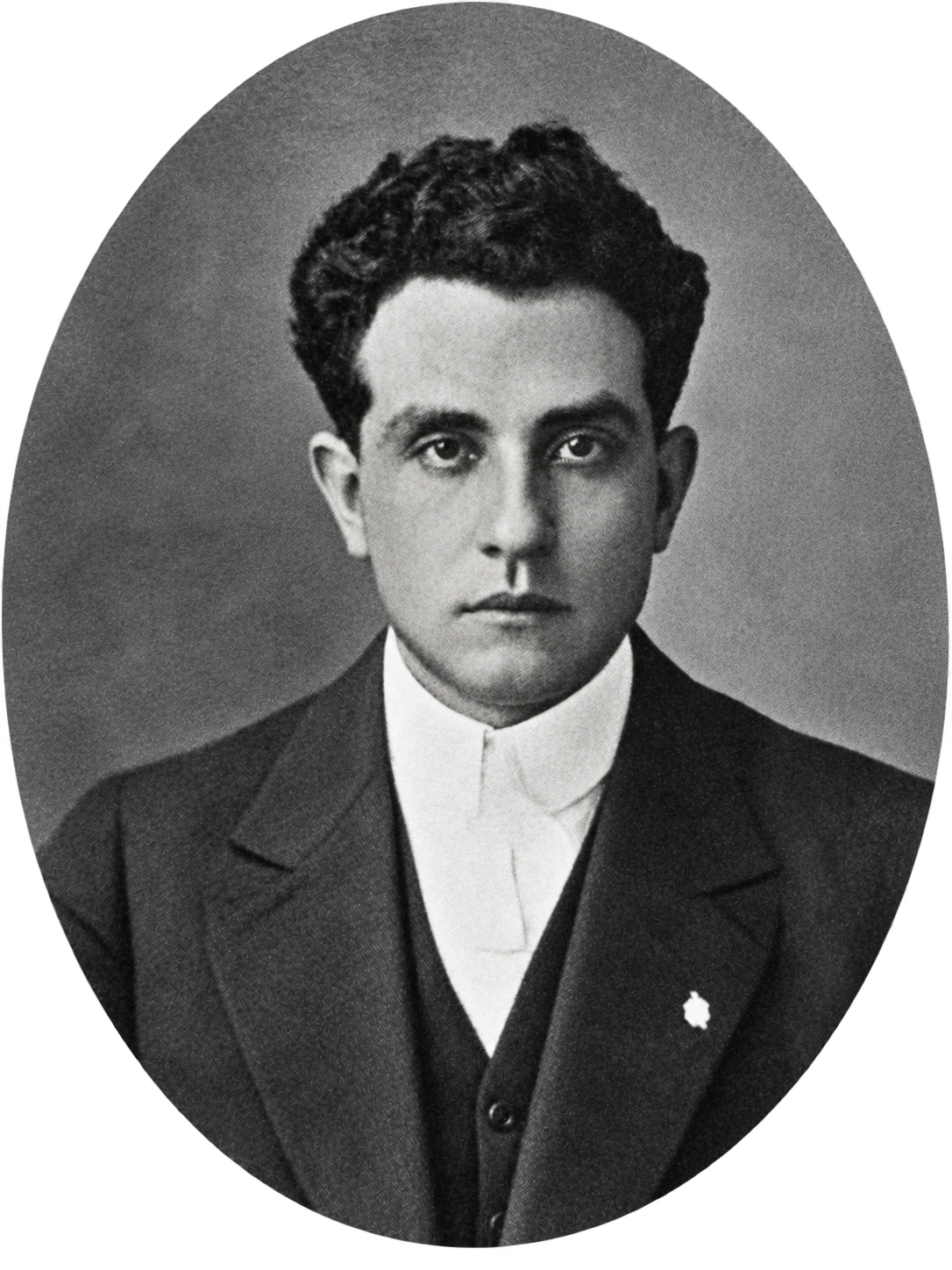
Blessed Anacleto González Flores, patron of the Catholic laity of Mexico, was a husband and father, lawyer, teacher, and one of the great lay Catholic leaders of twentieth-century Mexico. Known affectionately as El Maestro, he placed his remarkable intellectual gifts at the service of forming others in the faith and defending religious freedom through prayer, education, organization, and peaceful civic resistance.
Arrested and brutally tortured in 1927, he refused to betray his companions and went to his death forgiving his persecutors. His martyrdom crowned a life in which faith, family, intellectual formation, professional work, and responsibility for society had become one Christian vocation.
Today, as devotion to Blessed Anacleto grows and the hope for his canonization looks beyond Mexico, his witness speaks to the universal vocation of the Christian laity: to bring Christ into family life, culture, professional work, and society—and to remain faithful when that witness carries a cost.
Anacleto González Flores was born in Tepatitlán, Jalisco, on July 13, 1888, into a family of modest means. His youth was marked by a religious transformation that would shape the rest of his life. Around 1905, at the age of seventeen, he experienced a decisive conversion in the context of a mission held in Tepatitlán. From that point onward, he embarked on an intense period of spiritual and intellectual formation. In 1908 he entered the Auxiliary Seminary of San Juan de los Lagos, where his intellectual and pedagogical gifts earned him the nickname “Maistro Cleto.” He eventually understood, however, that his vocation was not to the priesthood: his would be a distinctly lay vocation, lived in the midst of culture, family, and society.
His move to Guadalajara brought him into one of the most dynamic Catholic environments in early twentieth-century Mexico. Throughout his years in the city, Anacleto always lived within a short distance of the Church of San José de Gracia, which became one of the principal centers of his spiritual and apostolic life. There, in 1913, he was admitted together with Miguel Gómez Loza to the Marian Congregation of San José de Gracia. He was also a member of the Third Order of St. Francis and later found in the Catholic Association of Mexican Youth (ACJM) one of his principal fields of apostolate. Only three blocks from San José de Gracia stood the Jesuit-run Instituto de San José, another important center for the formation of Guadalajara’s Catholic youth. The Jesuits also played a fundamental role in the spiritual direction and formation of the Marian Congregations, connecting Marian devotion with the Spiritual Exercises, personal discipline, and lay apostolate. The Institute closed its doors in 1914 amid the Revolution and remained closed for six years. This physical proximity helps us understand the extraordinary density of the Catholic world in which Anacleto was formed.
His professional formation was likewise intertwined with this network of relationships. Within a few blocks, therefore, one could find the church, the Marian Congregation, the Jesuit school, spiritual direction, academic studies, the law office, friendships, and Catholic associations. Anacleto was not simply an exceptional individual who appeared spontaneously at a moment of crisis; he was also the product of a genuine Catholic formative ecology, in which spiritual life, intellectual formation, professional life, friendship, and apostolate mutually reinforced one another.
Anacleto became a lawyer, teacher, journalist, orator, catechist and, above all, a formator of others. He studied law and developed an extraordinary intellectual apostolate through books, articles, newspapers, lectures, study circles, and teaching. His concern was not merely to defend particular positions against the State, but to form people: to teach young men to study, reason, speak in public, write, organize, and responsibly assume their place as Catholics in society. His oratorical gifts became renowned throughout Jalisco, and his service to the Church was recognized by the Holy See with the Pro Ecclesia et Pontifice decoration. In October 1922 he married María Concepción Guerrero, with whom he had two children. Marriage, profession, apostolate, and spiritual life were not competing vocations for him, but dimensions of a single Christian lay vocation.
This understanding naturally led to organized social action. Anacleto belonged to the generation of social Catholicism formed under the influence of Rerum Novarum and the great Catholic associations of the early twentieth century. Faith was expected to produce education, a Catholic press, associations, solidarity, the formation of leaders, and responsible lay participation in public life. The defense of the Church, therefore, could not be reduced to waiting for priests and bishops to act; it required a spiritually disciplined and intellectually prepared laity capable of building institutions. This intuition reached its most ambitious expression in the Unión Popular, which developed throughout Jalisco a network of formation, propaganda, communication, and social mobilization. According to the biography published by the Holy See, it eventually numbered tens of thousands of members. For much of the conflict, Anacleto insisted on peaceful civic resistance, employing popular organization and the legal and social means still available.
The religious crisis of 1926 radically transformed the circumstances in which he had to act. The enforcement of anticlerical measures under the government of Plutarco Elías Calles, the suspension of public worship, and the failure of various forms of protest and negotiation ultimately led to the armed uprising known as the Cristiada. Until then Anacleto had advocated nonviolent resistance; toward the end of 1926, after what he regarded as the exhaustion of civil remedies and as the rebellion spread, he supported the cause of the National League for the Defense of Religious Liberty. The distinction is important for understanding him: Anacleto was not primarily a Cristero military leader. He was a lay leader, intellectual, and organizer whose strategy changed in circumstances he considered extreme. During the first months of 1927 he remained in hiding, writing bulletins and sustaining networks of resistance as the war spread through Jalisco.
In the early hours of April 1, 1927, he was arrested in Guadalajara and taken to the Cuartel Colorado. His captors sought information about the resistance and, among other things, the whereabouts of the Archbishop of Guadalajara, Francisco Orozco y Jiménez. Anacleto refused to provide it and was tortured before being executed that same day alongside Jorge and Ramón Vargas González and Luis Padilla Gómez. Testimonies subsequently gathered by the Church emphasize a particularly significant aspect of his final hours: he responded to those who tortured and condemned him with forgiveness. Before his death, he told General Jesús María Ferreira that he forgave him and would intercede for him before God. The life of the polemicist, organizer, and resistance leader thus culminated not in hatred of his adversaries, but in what had stood at the center of his formation from the beginning: the imitation of Christ carried to its ultimate consequences.
For this reason, the legacy of Anacleto González Flores cannot be reduced to the three years of the Cristero War, or even to his martyrdom. He was beatified in Guadalajara on November 20, 2005, together with other Mexican martyrs, but the life he lived before April 1, 1927, helps explain the meaning of that death. Anacleto was a martyr, husband and father, lawyer, intellectual, teacher, journalist, orator, organizer, and formator of young people. And he was possible, in part, because before the persecution there existed around him a dense network of churches, congregations, Jesuits, Spiritual Exercises, associations, teachers, friendships, and professional settings that integrated faith with everyday life. He subsequently sought to do for others what that world had done for him: to form people and build communities and institutions capable of transmitting the faith from one generation to the next. His story therefore poses a question that transcends the Cristiada: not only how the faith should be defended when persecution comes, but how, long before a crisis arrives, men and women can be formed who are capable of living it, transmitting it, and embodying it in society.